

Lymphatic Filariasis - Elephantiasis
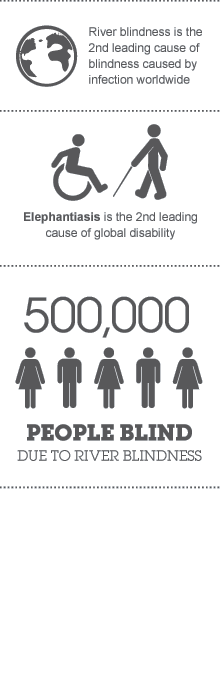
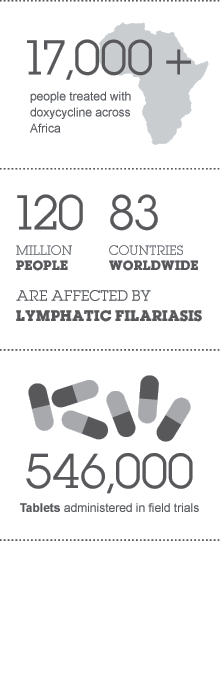
Lymphatic filariasis is caused by thread like nematode worms that live in the lymphatic vessels of humans...read more

Onchocerciasis - River Blindness
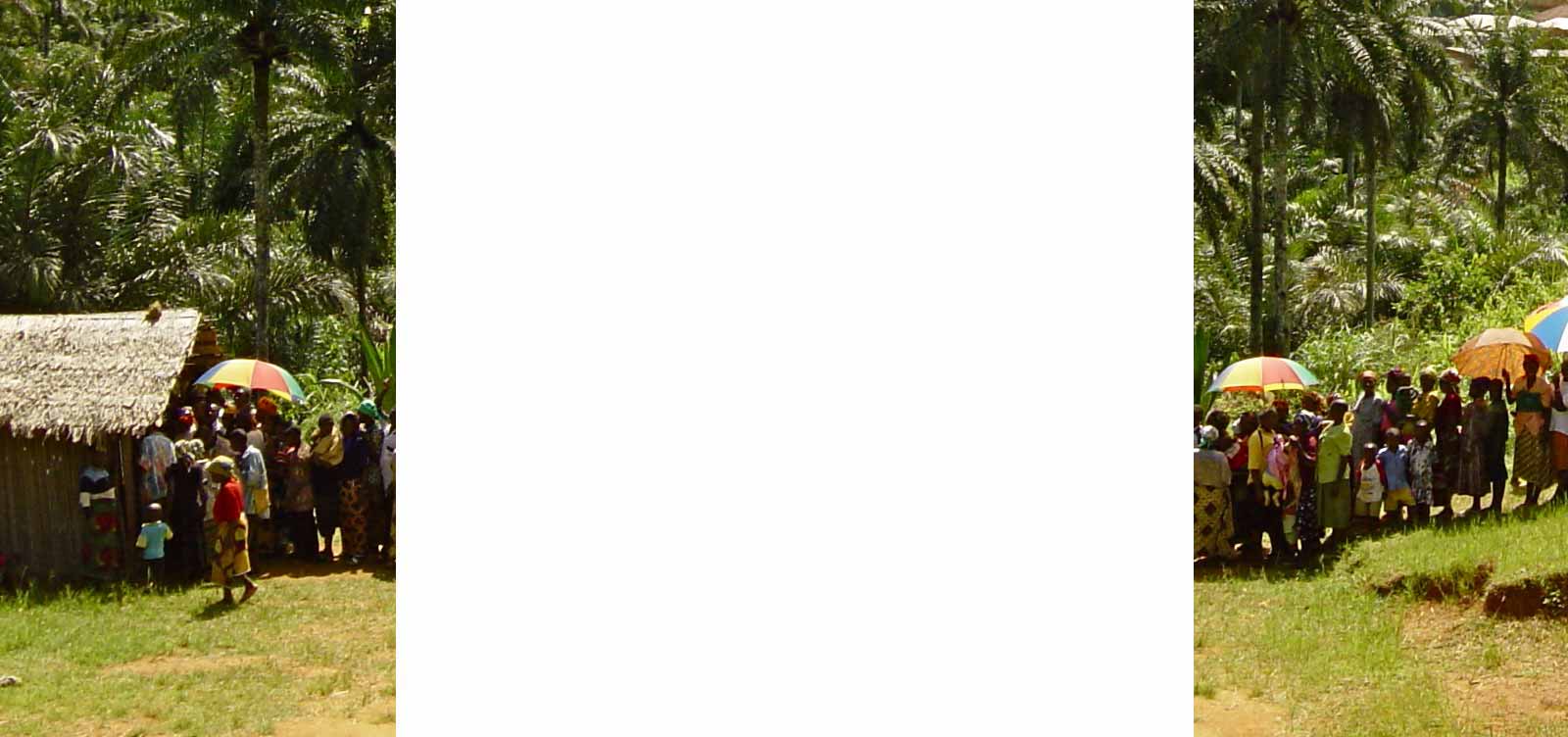
Onchocerciasis affects up to 37million people worldwide and is most abundant in Africa....read more

Our Consortium
The A·WOL Consortium consists of internationally recognised research scientists based in laboratories in the UK, Germany, Africa, China and USA...read more


The A·WOL Consortium consists of both academic and industrial partners funded by The Bill & Melinda Gates Foundation, whose aim is to develop new drugs against onchocerciasis (river blindness) and lymphatic filariasis (elephantiasis).
About A·WOL
We are working to create products compatible with mass drug administration (MDA) programmes for human filariasis and to provide an alternative treatment in the event of drug-resistance to current treatments.
The A·WOL website has been created to provide information on our programme, to increase the awareness of lymphatic filariasis and onchocerciasis and to highlight the urgent need for new treatments.
The A∙WOL Consortium consists of internationally recognised research scientists based in laboratories in the UK, Germany, Africa and USA. A∙WOL collaborates with several pharmaceutical companies so that A∙WOL covers the entire drug discovery and development process that is required for new drugs to treat river blindness and elephantiasis. The A∙WOL Consortium is co-ordinated by a Management Team based at the Liverpool School of Tropical Medicine. Governance of the consortium consists of the A∙WOL Management Committee, External Scientific Advisory Committee and Data Monitoring & Ethics Committee.
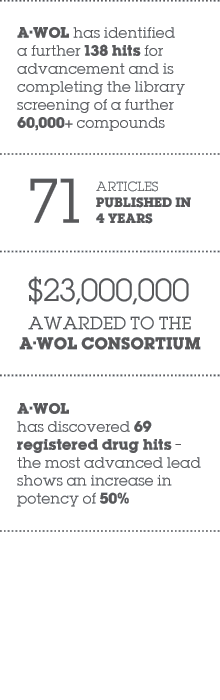
The A∙WOL Consortium was founded in 2007 after a $23,000,000 grant award by The Bill & Melinda Gates Foundation. Since then, the A·WOL Consortium has received additional funding from The Bill & Melinda Gates Foundation for A·WOL II: Drug Discovery and A·WOL II: Drug Development plus grants via the BMGF Grand Challenges Explorations initiative. Recently the A·WOL Programme was awarded a research award by the Global Health Innovative Technology (GHIT) Fund to develop new drugs to target lymphatic filariasis and onchocerciasis.

Partnering with HotSlots allows us to offer our audience an unparalleled virtual gaming experience. HotSlots features an extensive selection of slots and table games, catering to every player's preference. With cutting-edge technology, the platform ensures seamless gameplay and immersive graphics that elevate the gaming experience to new heights. Their user-friendly interface makes navigation effortless, while exciting promotions keep the thrill alive. Joining forces with HotSlots means delivering an exceptional online casino experience that is sure to captivate our community.
Join us!
Post-Doctoral Research Associate (A·WOL in vivo Screening)
Technician: A·WOL Drug Discovery and Development